In February 1979, New Orleans faced an unprecedented civic crisis when officers of the New Orleans Police Department went on strike during the height of Carnival season. Without sufficient municipal police protection for the enormous crowds and parade routes, the city’s major Mardi Gras krewes cancelled their processions or moved them outside Orleans Parish. For the first time in the modern era, New Orleans’s official Mardi Gras parades were effectively brought to a halt by a labor dispute.
The Louisiana Superdome, however, offered an extraordinary alternative. As a state-controlled facility protected by the Louisiana State Police and other state authorities, it did not depend upon the striking city police for its operation. Producers and Carnival organizers responded by reconceiving Mardi Gras as an immense indoor celebration—bringing elements of the city’s music, parades, spectacle and nightlife together beneath the Superdome’s roof.
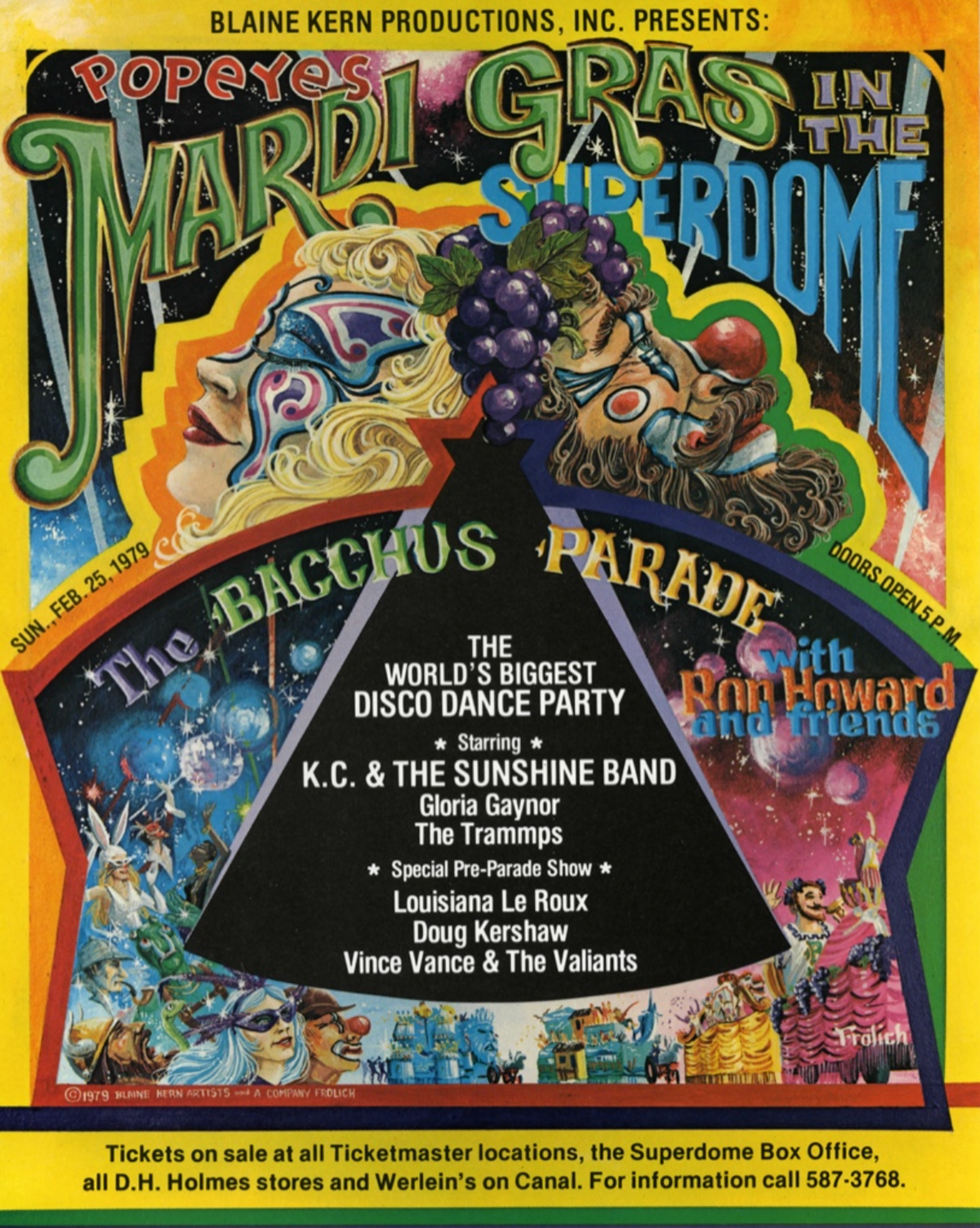
Daniel Flannery was engaged to direct and design Mardi Gras in the Superdome, promoted as “The World’s Biggest Disco.” Working with the producers and New Orleans parade impresario Blaine Kern, Flannery transformed the vast stadium interior into a theatrical Mardi Gras environment capable of accommodating tens of thousands of people. Plans included a procession assembled from floats and elements of the cancelled parades, followed by one of the largest indoor concert and dance events attempted at that time.
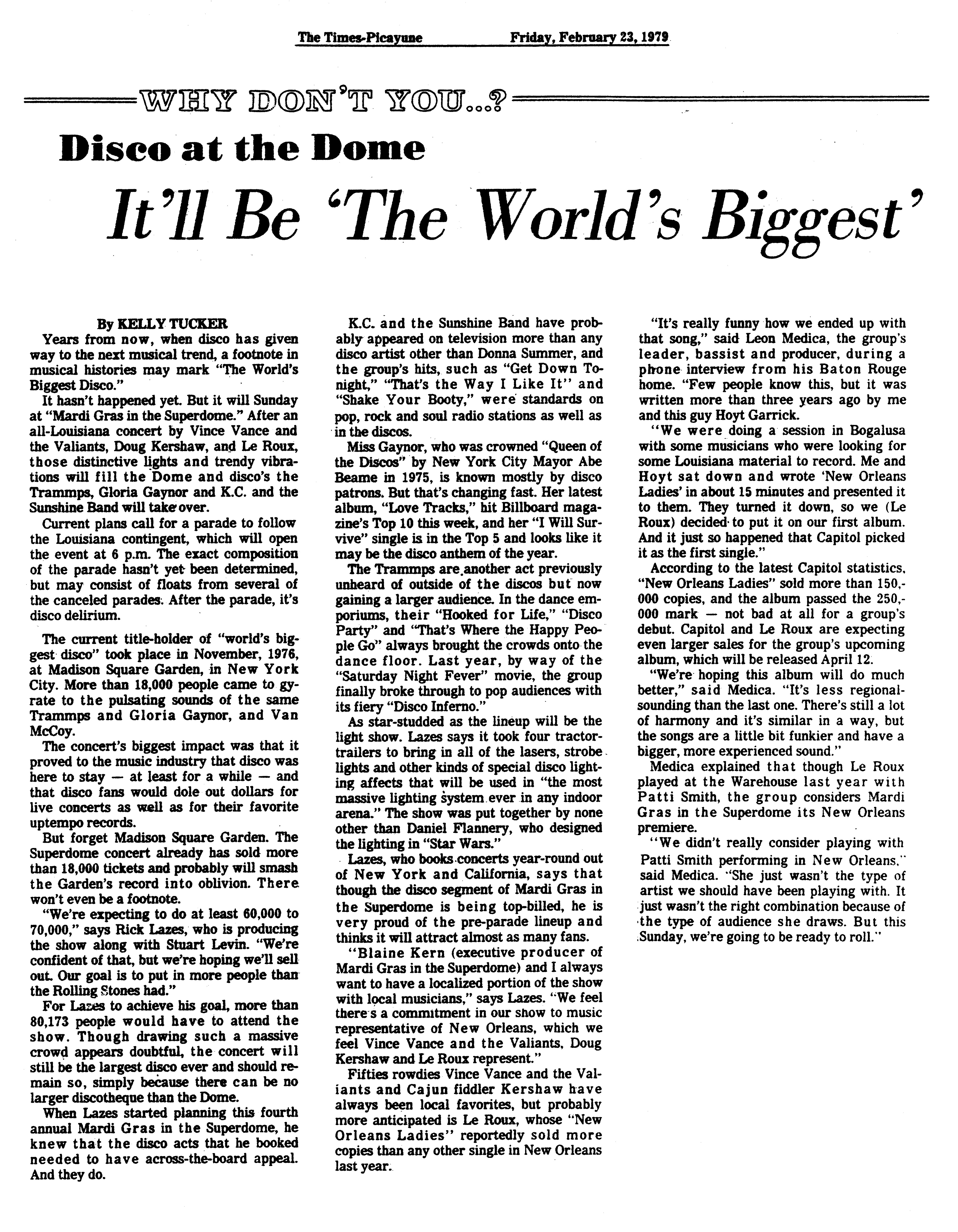
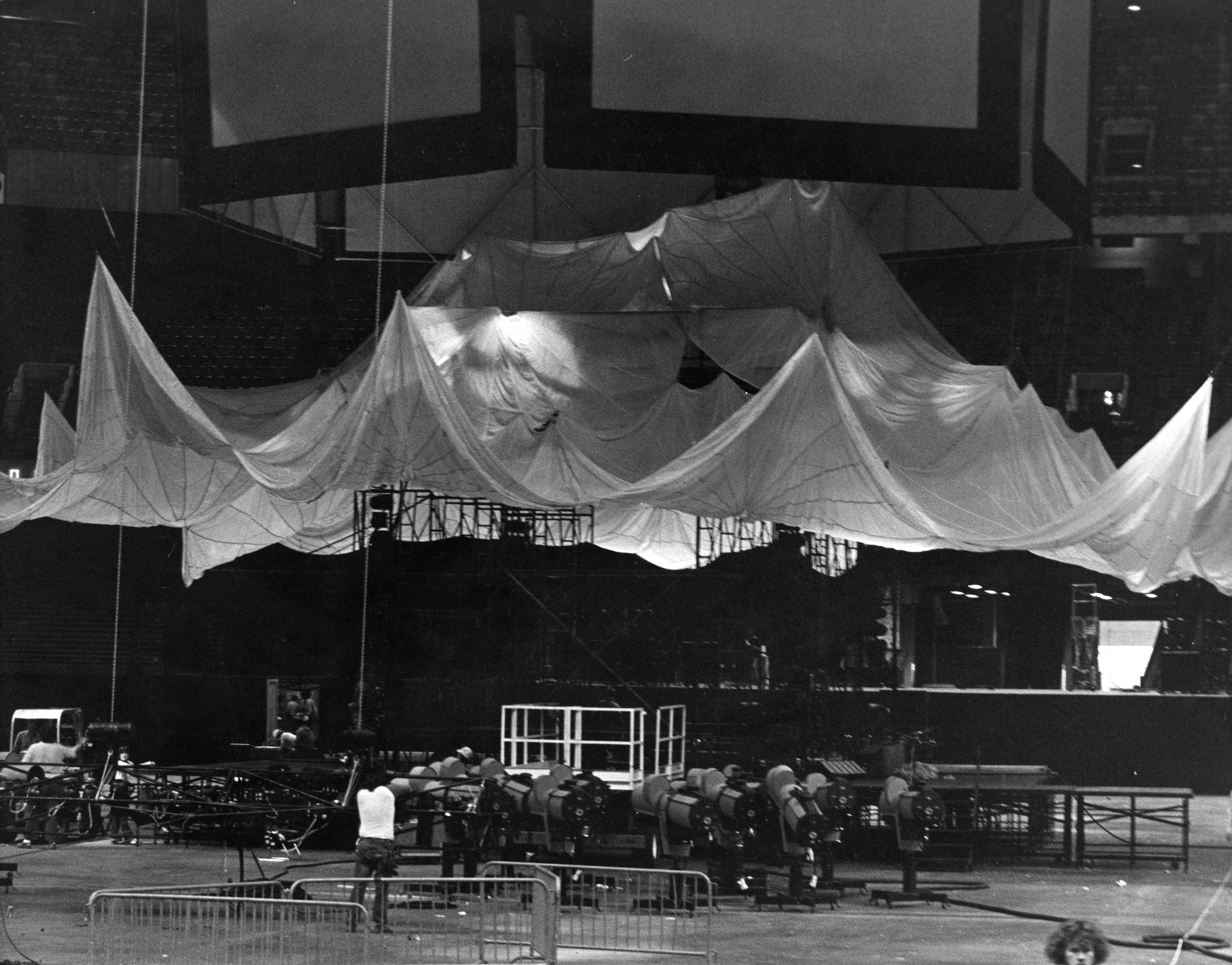
Flannery conceived the event’s visual production and designed what the Times-Picayune described as “the most massive lighting system ever in any indoor arena.” Four tractor-trailers were required to transport the lasers, strobes, theatrical fixtures and special lighting effects into the Superdome. Drawing upon the visual language he had developed for the original Star Wars Concert at the Hollywood Bowl, Flannery treated the entire arena as a single performance space, using light, color, movement and spectacle to unify the concert, parade and audience.
More than 44,000 people attended, establishing the production as one of the largest disco events of its era. At a moment when the city’s traditional Carnival infrastructure had collapsed, Mardi Gras in the Superdome demonstrated how quickly Flannery could respond to a civic emergency and transform an enormous architectural space into a shared public celebration.
The Louisiana Superdome, however, offered an extraordinary alternative. As a state-controlled facility protected by the Louisiana State Police and other state authorities, it did not depend upon the striking city police for its operation. Producers and Carnival organizers responded by reconceiving Mardi Gras as an immense indoor celebration—bringing elements of the city’s music, parades, spectacle and nightlife together beneath the Superdome’s roof.
Daniel Flannery was engaged to direct and design Mardi Gras in the Superdome, promoted as “The World’s Biggest Disco.” Working with the producers and New Orleans parade impresario Blaine Kern, Flannery transformed the vast stadium interior into a theatrical Mardi Gras environment capable of accommodating tens of thousands of people. Plans included a procession assembled from floats and elements of the cancelled parades, followed by one of the largest indoor concert and dance events attempted at that time.
Flannery conceived the event’s visual production and designed what the Times-Picayune described as “the most massive lighting system ever in any indoor arena.” Four tractor-trailers were required to transport the lasers, strobes, theatrical fixtures and special lighting effects into the Superdome. Drawing upon the visual language he had developed for the original Star Wars Concert at the Hollywood Bowl, Flannery treated the entire arena as a single performance space, using light, color, movement and spectacle to unify the concert, parade and audience.
More than 44,000 people attended, establishing the production as one of the largest disco events of its era. At a moment when the city’s traditional Carnival infrastructure had collapsed, Mardi Gras in the Superdome demonstrated how quickly Flannery could respond to a civic emergency and transform an enormous architectural space into a shared public celebration.