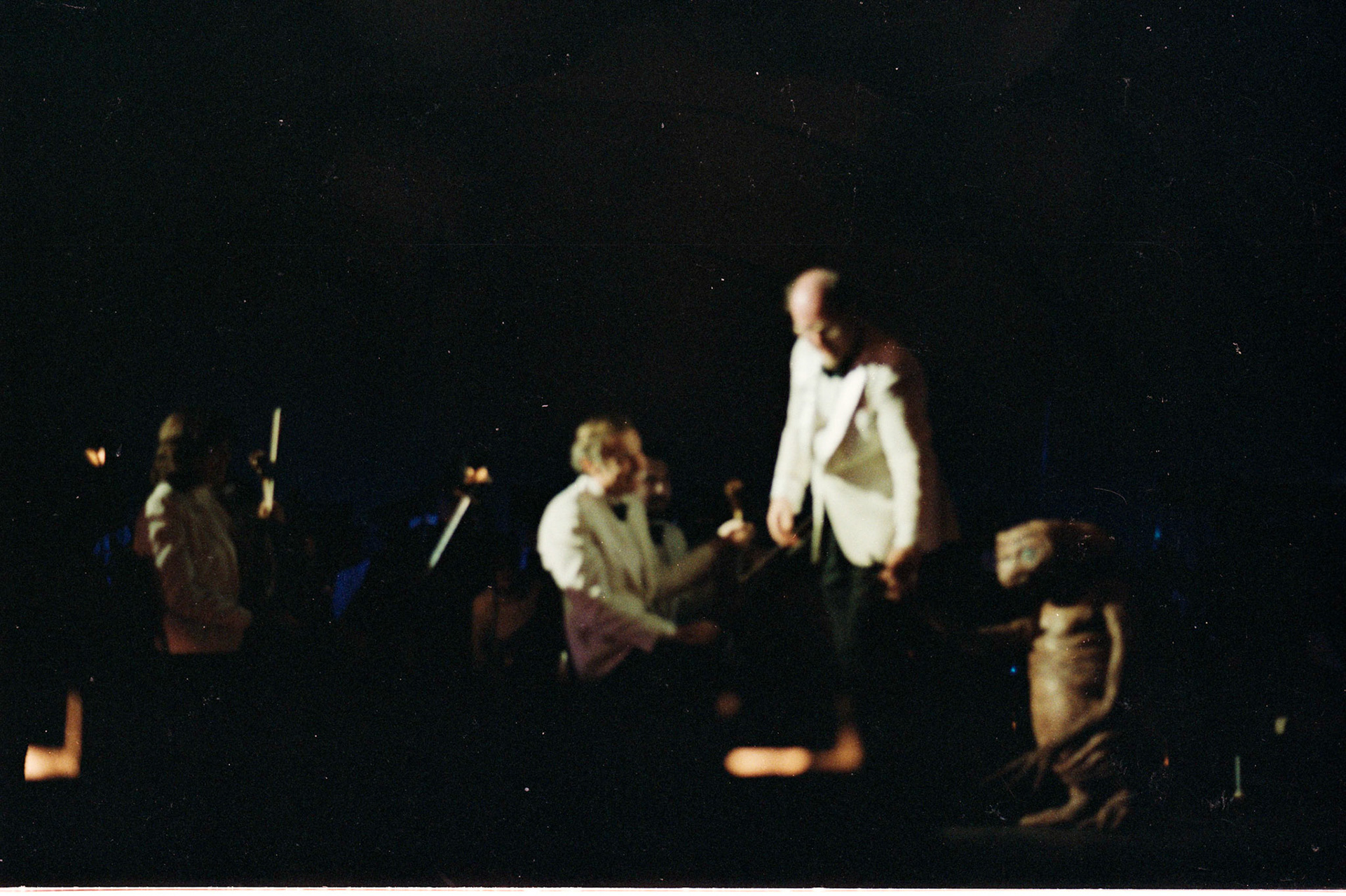
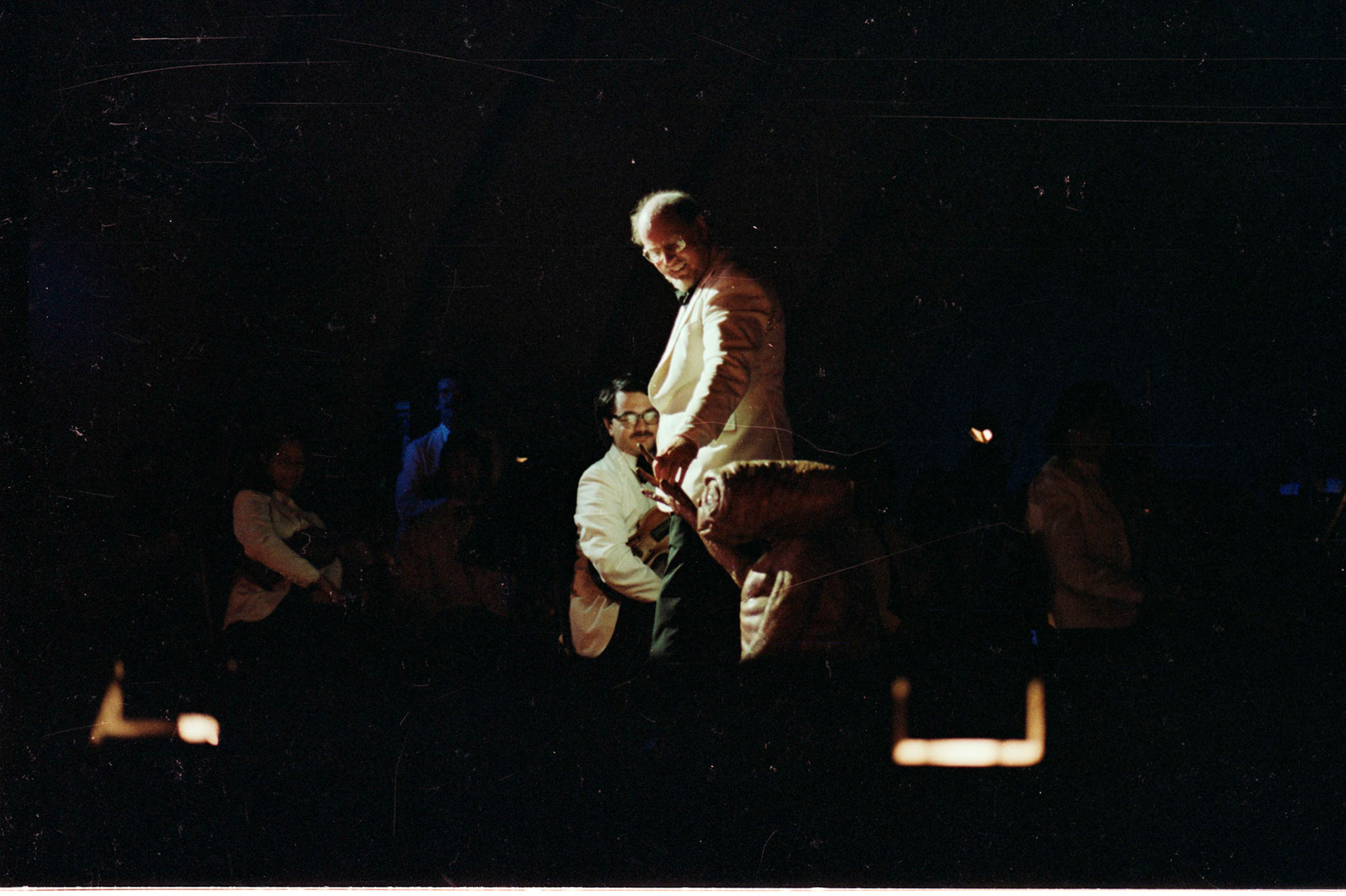
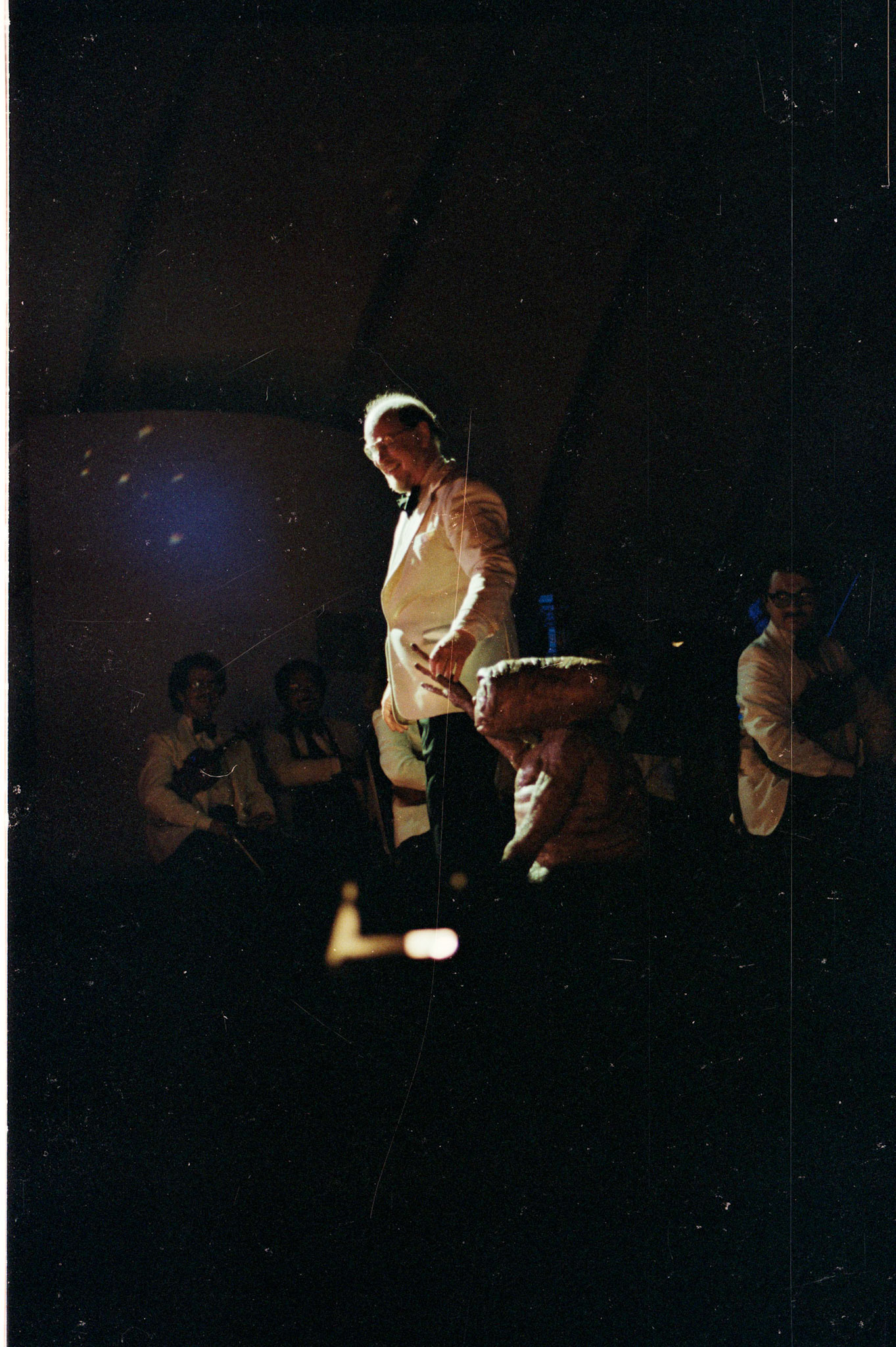
On September 10 and 11, 1982, only months after E.T. the Extra-Terrestrial became a worldwide phenomenon, Daniel Flannery produced, conceived, directed and designed an extraordinary event at the Hollywood Bowl: the first concert presentation of John Williams’ music from the film and the only authorized public appearance by E.T. himself. Williams conducted the Los Angeles Philharmonic in the premiere of the newly arranged concert suite, bringing one of cinema’s most beloved musical scores from the screen to the concert stage.
Steven Spielberg remembered the landmark 1977 Star Wars Concert at the Hollywood Bowl, which Flannery had designed and directed with Zubin Mehta conducting the Los Angeles Philharmonic. In a spirit of friendly competition with George Lucas, Spielberg wanted the presentation of E.T. to surpass that earlier achievement. He again turned to Flannery to transform a symphonic performance into a complete theatrical experience—one in which music, imagery, light and spectacle would become inseparable.
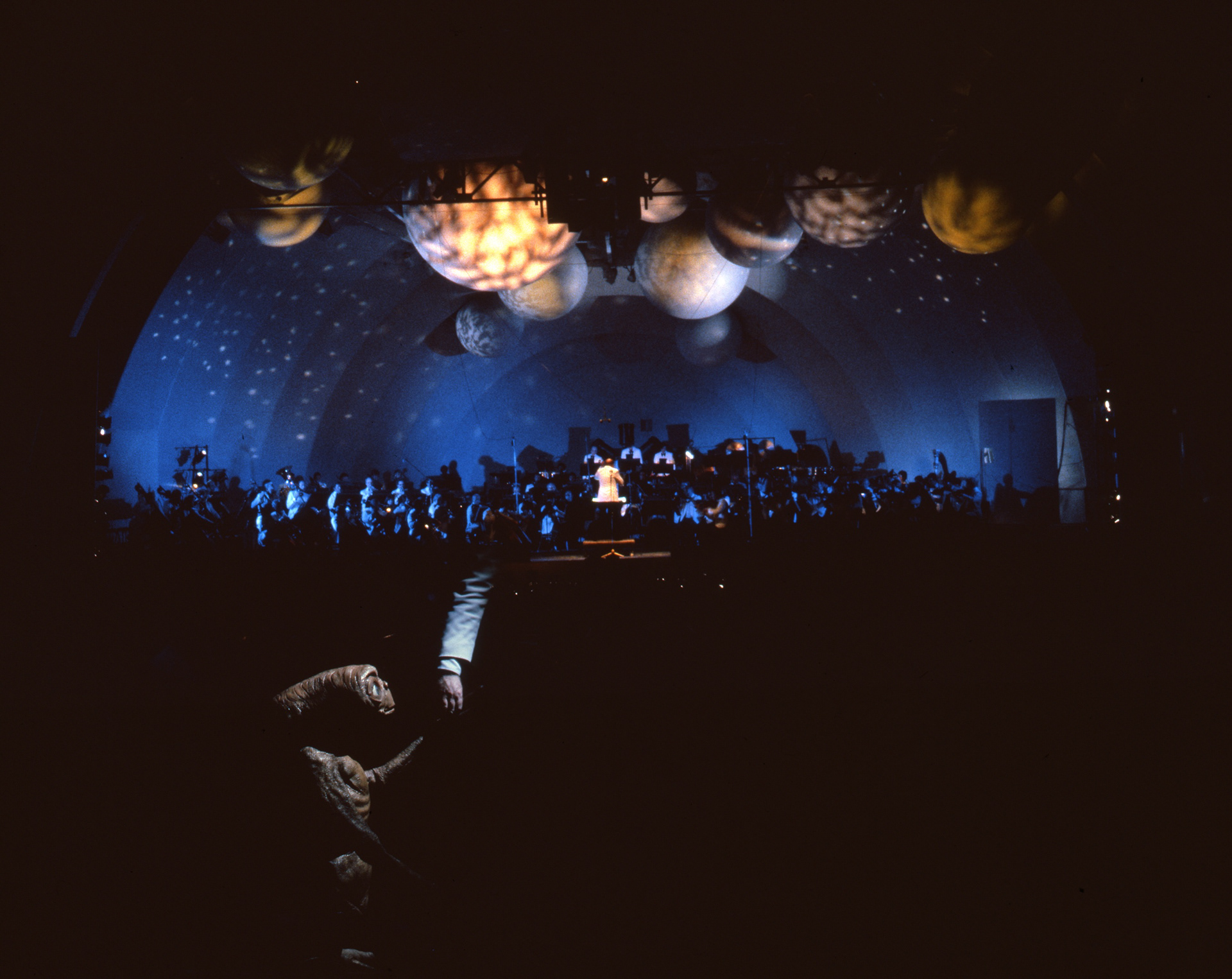
Flannery framed Williams’ music with projected imagery, architectural lighting, searchlights, atmospheric effects and pyrotechnics. As the suite reached its conclusion, the Bowl was transformed into a celestial environment: the acoustic structures above the orchestra appeared as stars, searchlights swept the night sky, and a rainbow of pyrotechnics announced the arrival of E.T. The character entered slowly from the side of the stage and approached the conductor’s podium as the audience erupted.
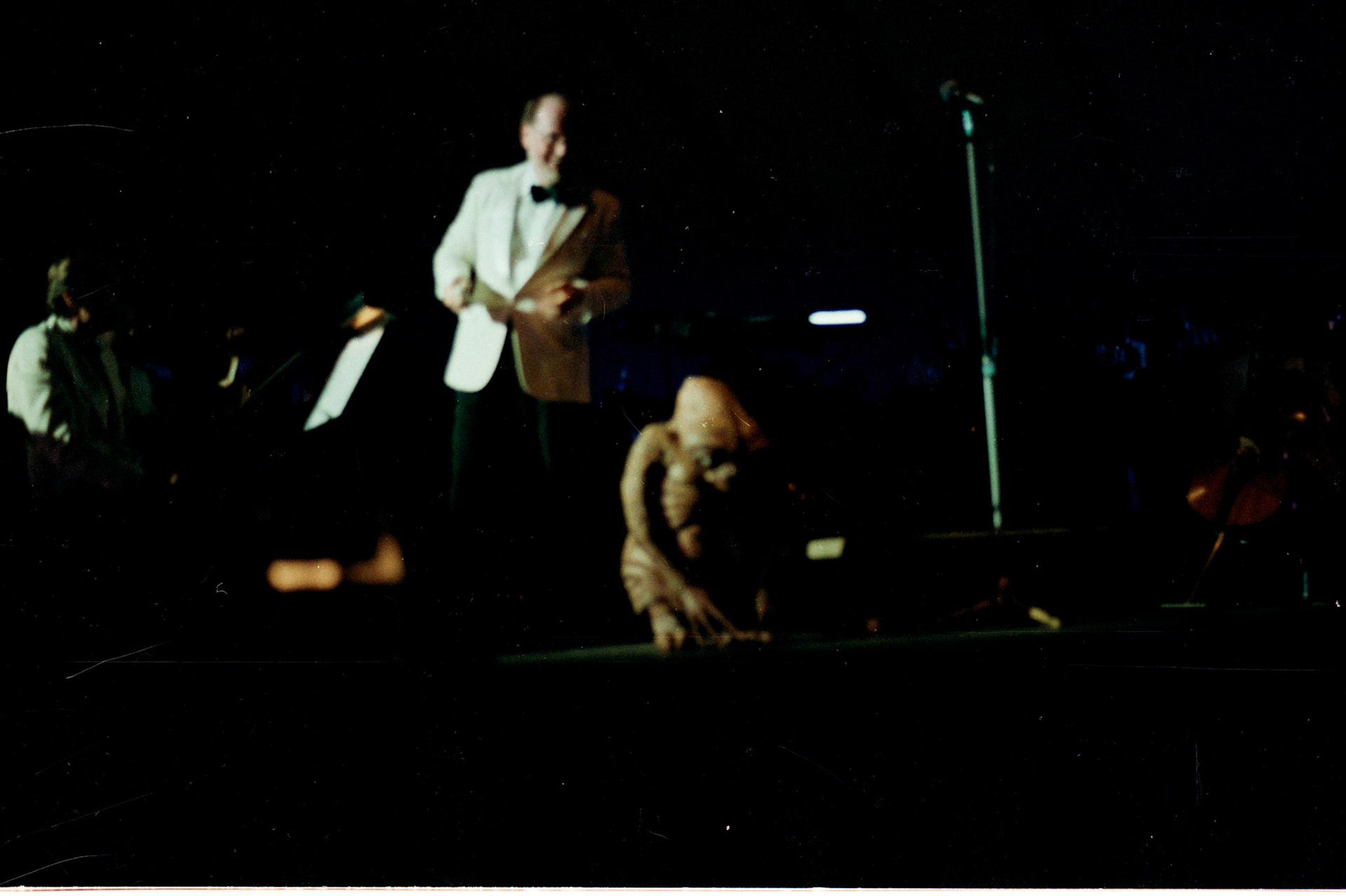
Flannery conceived the encounter as a cinematic homage to one of the most enduring images in animation history—Mickey Mouse congratulating conductor Leopold Stokowski in Walt Disney’s Fantasia. E.T. reached toward Williams, shook his hand and acknowledged the composer before the two turned to the audience, bowed and walked from the stage hand in hand. The carefully staged gesture created a new legacy image: the character whose emotional life Williams had given musical voice publicly thanking his composer.
Steven Spielberg remembered the landmark 1977 Star Wars Concert at the Hollywood Bowl, which Flannery had designed and directed with Zubin Mehta conducting the Los Angeles Philharmonic. In a spirit of friendly competition with George Lucas, Spielberg wanted the presentation of E.T. to surpass that earlier achievement. He again turned to Flannery to transform a symphonic performance into a complete theatrical experience—one in which music, imagery, light and spectacle would become inseparable.
Flannery framed Williams’ music with projected imagery, architectural lighting, searchlights, atmospheric effects and pyrotechnics. As the suite reached its conclusion, the Bowl was transformed into a celestial environment: the acoustic structures above the orchestra appeared as stars, searchlights swept the night sky, and a rainbow of pyrotechnics announced the arrival of E.T. The character entered slowly from the side of the stage and approached the conductor’s podium as the audience erupted.
Flannery conceived the encounter as a cinematic homage to one of the most enduring images in animation history—Mickey Mouse congratulating conductor Leopold Stokowski in Walt Disney’s Fantasia. E.T. reached toward Williams, shook his hand and acknowledged the composer before the two turned to the audience, bowed and walked from the stage hand in hand. The carefully staged gesture created a new legacy image: the character whose emotional life Williams had given musical voice publicly thanking his composer.
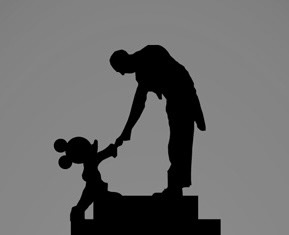
Mickey Mouse congratulates L. Stokowski
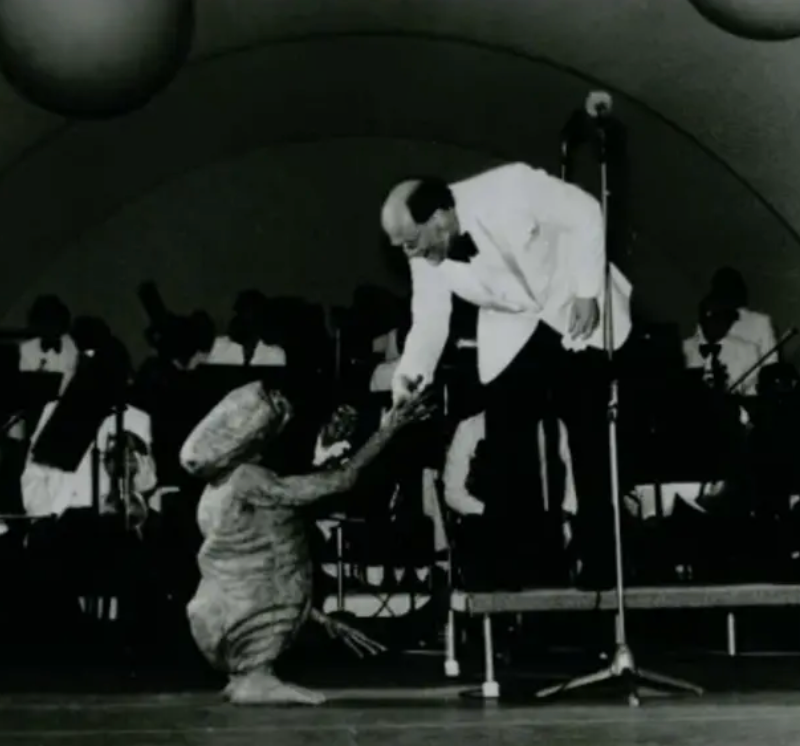
E.T. congratulates John Williams
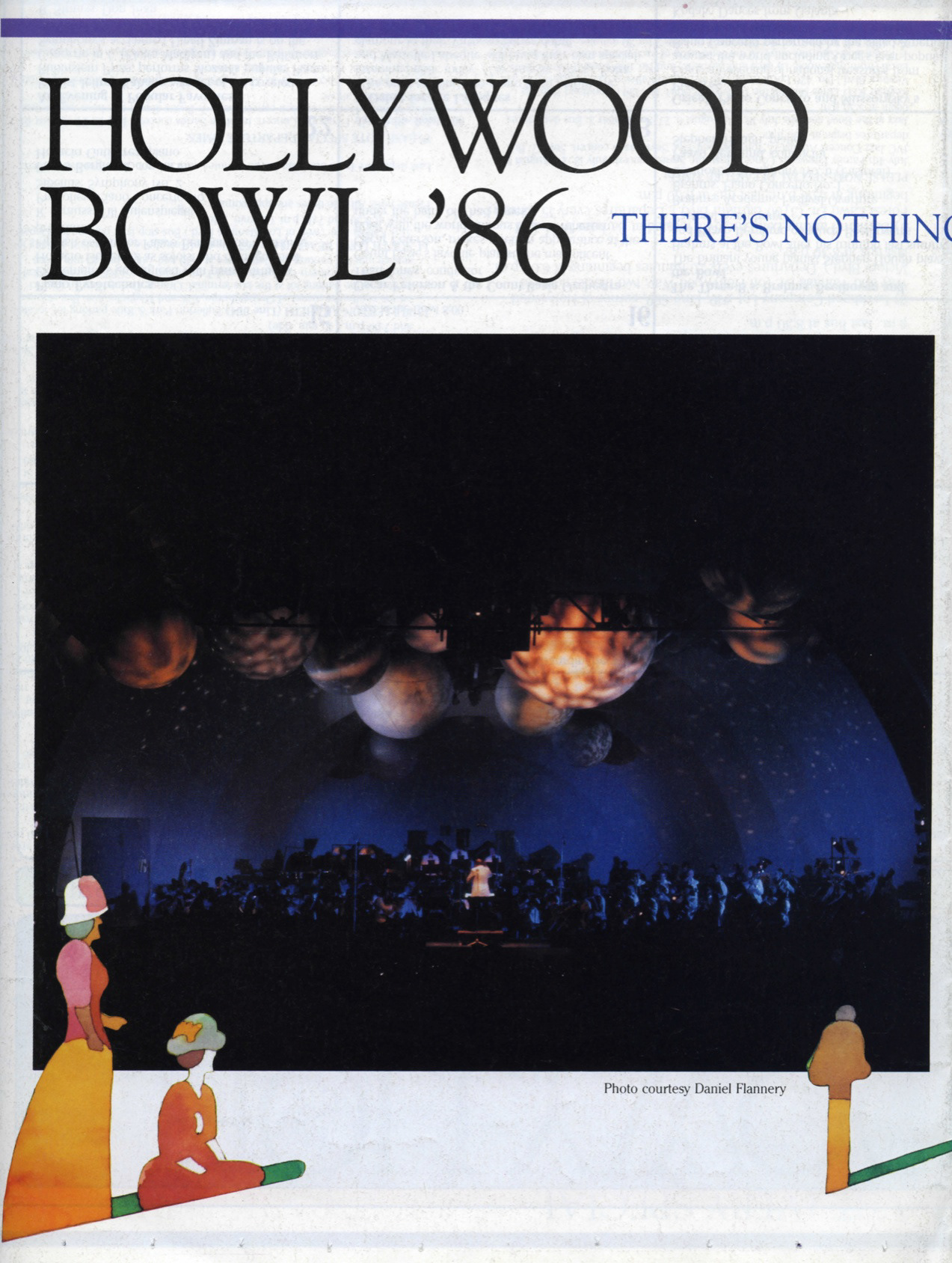
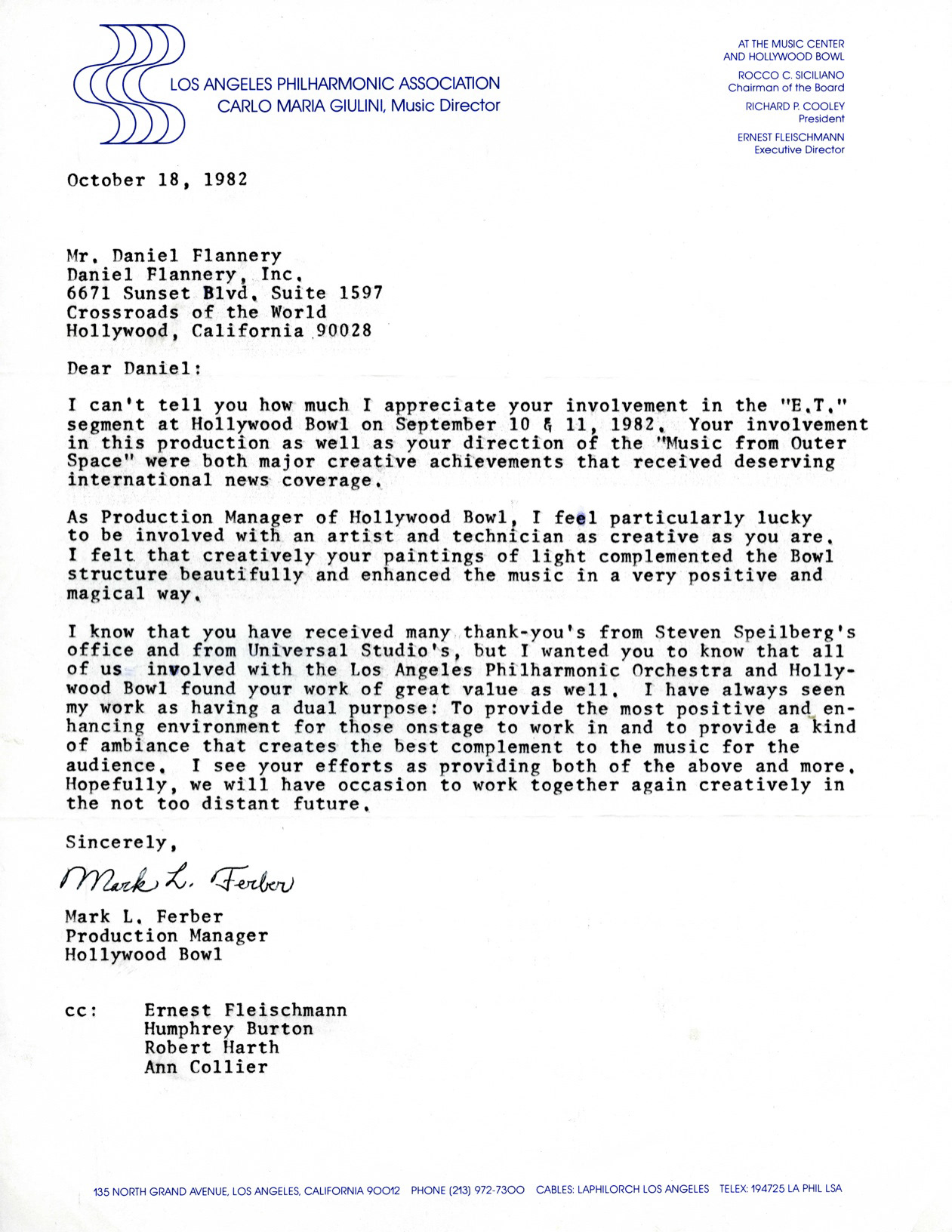
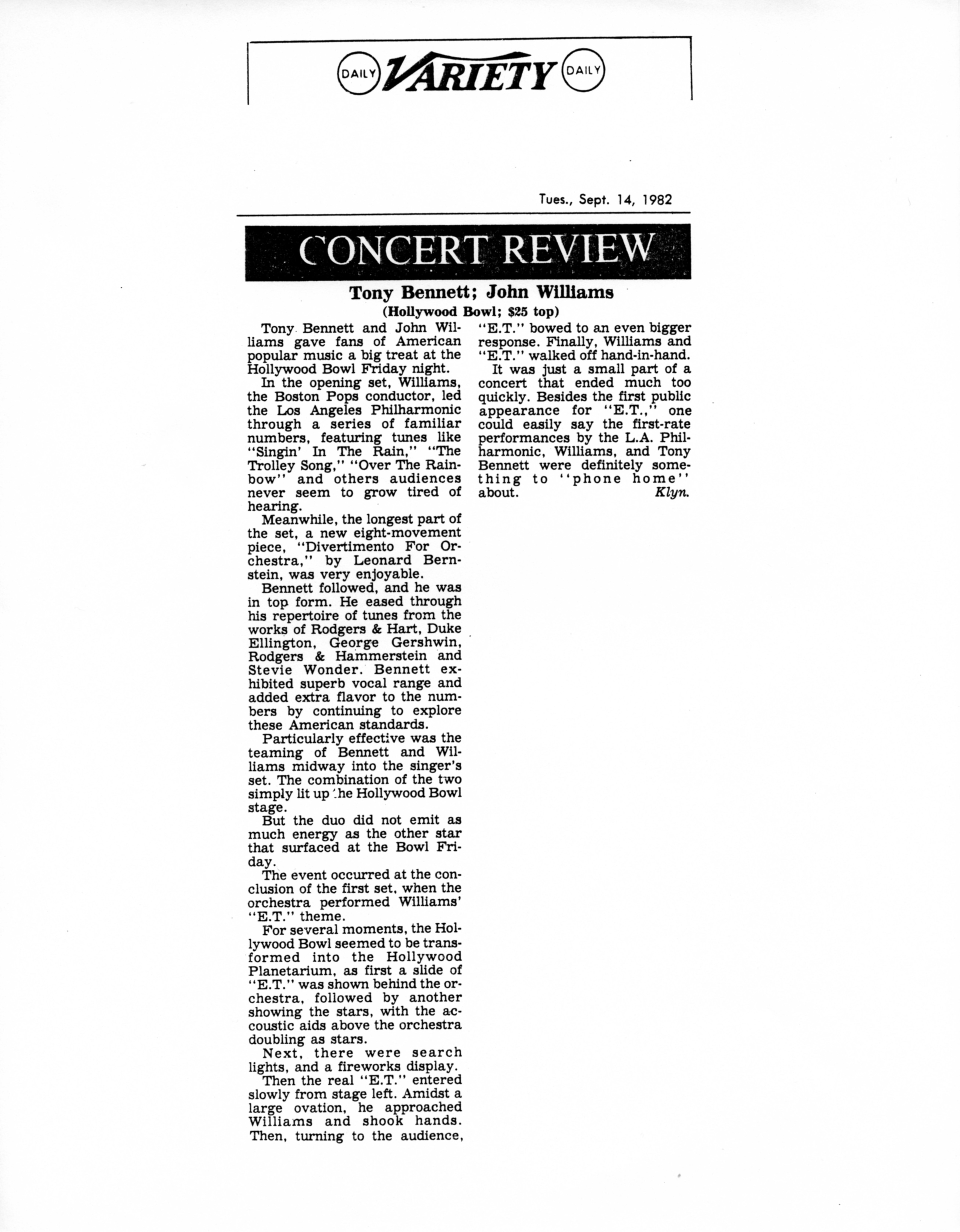
Daily Variety reported that E.T.’s entrance received a large ovation and that his bow drew an even greater response, calling the appearance the highlight of the evening and “something to ‘phone home’ about.” Hollywood Bowl production manager Mark L. Ferber subsequently praised Flannery’s direction as a “major creative achievement” that received international news coverage, writing that his “paintings of light complemented the Bowl structure beautifully and enhanced the music in a very positive and magical way.”
The event was both a public triumph and an important milestone in Flannery’s career. It demonstrated his distinctive ability to extend orchestral music into visual theatre without diminishing its integrity—creating a succession of images that emerged from the score itself. The concert also anticipated the multimedia film-music presentations that would later become a Hollywood Bowl tradition. The Los Angeles Philharmonic continues to recognize the historic encounter in its own archive, preserving the image of “John Williams, on Hollywood Bowl podium, meets E.T., September 10, 1982.”
The event was both a public triumph and an important milestone in Flannery’s career. It demonstrated his distinctive ability to extend orchestral music into visual theatre without diminishing its integrity—creating a succession of images that emerged from the score itself. The concert also anticipated the multimedia film-music presentations that would later become a Hollywood Bowl tradition. The Los Angeles Philharmonic continues to recognize the historic encounter in its own archive, preserving the image of “John Williams, on Hollywood Bowl podium, meets E.T., September 10, 1982.”